The 1608 Creu de Terme, in Gothic style, presided over the town’s main square until the 1920s when it fell and was placed under the Almatret bell tower. During the Civil War it was removed by the sculptor Apel·les Fenosa to protect it from the effects of the conflict, and was placed in the Monastery of Sant Cugat. However, it never returned to its place. It was discovered years ago in front of the Church of Sant Anna in Barcelona. It was quickly claimed by Almatret and,after some negotiations, the general secretariat of the first councilor of the Generalitat took charge of the restoration and the bishopric of Barcelona agreed to return it in April 2005.
To restore it, all the original forms were taken into account, even respecting the worn parts before removing it from Almatret. Both the cross itself and the capital were restored, while the stairs, base and column that make up the entire Creu de Terme complex were made anew from photographs. In total, 6.80 meters high by 3 meters wide.
On December 20, 2005, at 12:20 in the morning, the Creu de Terme returned to preside over the Plaça Major, with great anticipation from its legitimate owners, the residents of Almatret.
Millstone
At the heart of the Main Square stand the millstone (mola) and the lower millstone (sotamola), impressive stone pieces dating from the 19th century and originating from the village’s old olive mills. They pay tribute to the traditional craft of olive oil production, a practice deeply rooted in local history.
The lower millstone served as the base supporting the mill wheel, where the ground olive paste would fall. This paste was then placed into mats and pressed to extract the precious olive oil.
The Fountain
This sculptural ensemble, created by the sculptor Tamarit, features a basin crafted by Antonio Mur, “Tonet”, a local stonemason. It was inaugurated on May 30th, 1971, to commemorate the arrival of running water to the village in 1963.
The water is pumped from the Ebro River up to the Almatret plateau, overcoming a height difference of 400 metres.
The figure carved atop the fountain evokes the traditional system of water transport, when water was manually collected from wells, ponds, or cisterns.
Sant Miquel Parish Church
The Parish Church of Sant Miquel is Baroque (18th century) and one of the most notable examples of this style in Segrià and Les Garrigues; its main portal is framed by two columns with Composite capitals.
It was built to replace the old church, one of the first buildings erected in the village after its Founding Charter. The original church had become too small due to population growth driven by the expansion of olive cultivation, as happened in many other villages in Les Garrigues.
The first Mass was celebrated there on the feast of Saint Michael (29 September) in 1768, seventeen years after work began.
Old Almatret Prison
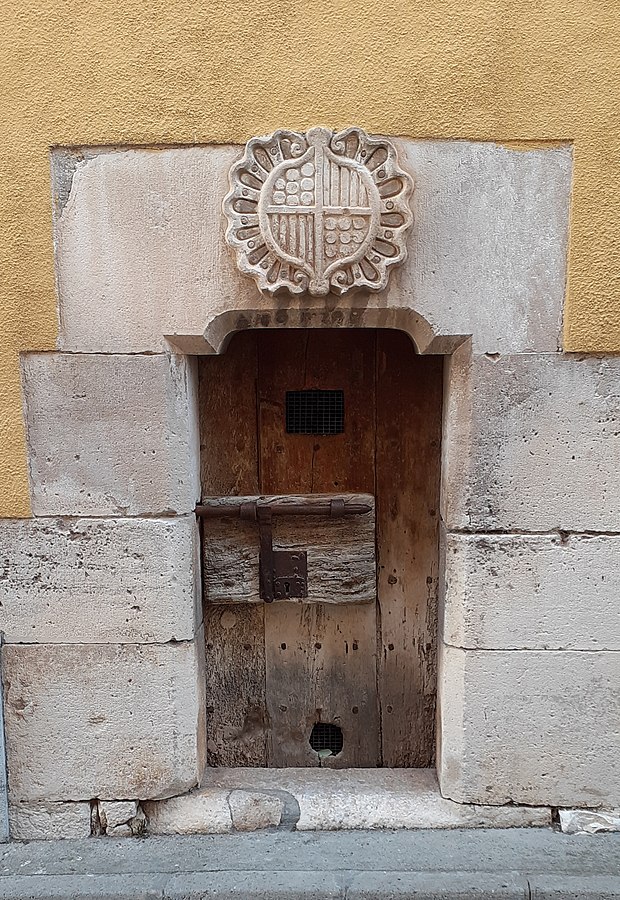
The old prison of the village is in the main street, 24. Above the door you can see the coat of arms of the house of the Montcada. The first Marquis of Aitona was Francesc de Montcada y de Cardona, who died in 1594 and was buried in the Seu Vella de Lleida.
This marquisate included the town of Almatret, in which they had a house, which is still preserved today in the square next to the old prison.
Casa Jacinto Wine Cellar
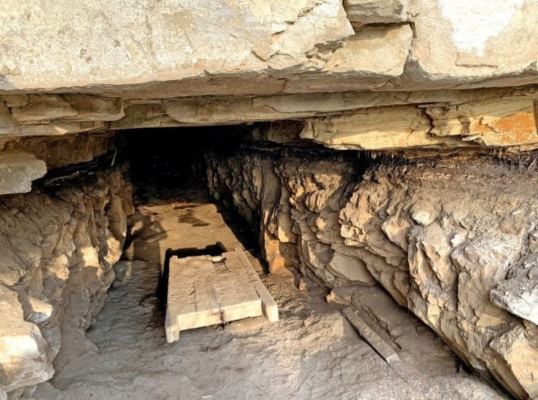
A cavity carved into the rock face, which also serves as its roof.
It is a cool and dry space where wine was stored, along with other drinks and food on occasion. It was especially useful in times when refrigerators did not yet exist.
Access is gained via a stairway revealed beneath a ground-level trapdoor.
During the Spanish Civil War, this place was used as a shelter from air raids.
Wine cellars like this one can still be found in many of the village’s houses.
Republican Hall
In a traditional alleyway in the very heart of the village stands the Republican Hall, which traditionally occupied the house that once hosted the Balaguer Cinema. This place held great significance during the years of the Spanish Civil War.
In 1937, the local collective of Almatret issued cardboard coins in different colours for each denomination, which were legalised by the town council and adopted by the local population.
The Tower House
Located at the highest point of the village, it probably owes its name to the defensive tower mentioned in the Charter of Population of Almatret, signed in 1301. This document, granted by Guillem d’Entença and Berengària de Montcada to the first settlers, already stipulated the construction of the tower.
Almatret’s connection with the Montcada family dates back to the late Middle Ages.
In the 15th century, the village was part of the Barony of Aitona, which later became a county and, finally, a marquisate, when Philip II granted the title of first Marquis of Aitona to Francesc de Montcada i de Cardona in 1581.
The Tower House belonged to the marquises. Restored today, it is privately owned.
Casa Isaac de Vilà - Miquel Viladrich Vilà’s family residence
A representative residence that preserves the essence of Almatret’s history, featuring century-old structures, an olive oil mill, and clear traces of former stables.
Miquel Viladrich Vilà (Torrelameu, 1887 – Buenos Aires, 1956) spent long periods here and painted many of his early works on the premises.
Much of his work, classified between costumbrismo (depiction of everyday life) and symbolism, can be found at the Hispanic Society of America in New York and at the Jaume Morera Art Museum in Lleida. Particularly remarkable is his extensive gallery of portraits depicting farmers, artisans, and people from his close surroundings.
The emblematic painting dedicated to the village, The Mayor of Almatret, can be admired in the Viladrich Hall of the Palau de la Diputació de Lleida. The Almatret Town Council displays a faithful reproduction of the work.
The Hermitage of Sant Joan and its Viewpoint
The Hermitage of Sant Joan is located right next to the municipal cemetery, about 300 metres out of the village on Sant Joan Street. This hermitage has been built recently keeping the style and characteristics of the hermitage that was destroyed a few years ago. Behind it is the viewpoint where there are benches so that people can go up to contemplate the magnificent views that can be seen from the nearby villages.
Casa Jacinto Washhouse
This is a large water reservoir, excavated into the ground and lined with dressed stone blocks and rectangular slabs. It was built at a low point in the village to collect and store rainwater.
The reservoir was used for watering livestock, to water crops, and power the adjoining olive oil mill.
El Pou de la Vila
Leaving the village, at the end of the street Pou we find to the right a way that takes us until this Well that already consists in the ordinances of the year 1558. Tradition attributes it to the Saracens, but it could be earlier. The well is made of stone as well as the wide staircase to go down to the water level, next to it are still preserved the 11 washing places made of stone that belonged to the 11 families that populated Almatret.
La Bassa
It’s in the little valley that borders the village to the south. It is called Balsa de Arriba because it is a few meters higher on the slope than the Balsa below (impressive water receptacle built in stone, now disappeared). These rafts have been essential for centuries.
The raft area has now been fitted out as a recreational space. We find many other rafts wisely distributed throughout the term. None of them are the same, but they all become an attraction that attracts any trace of life. It is very gratifying to do a tour to discover the small ecosystems they generate.
Museum Pepe Guillermo
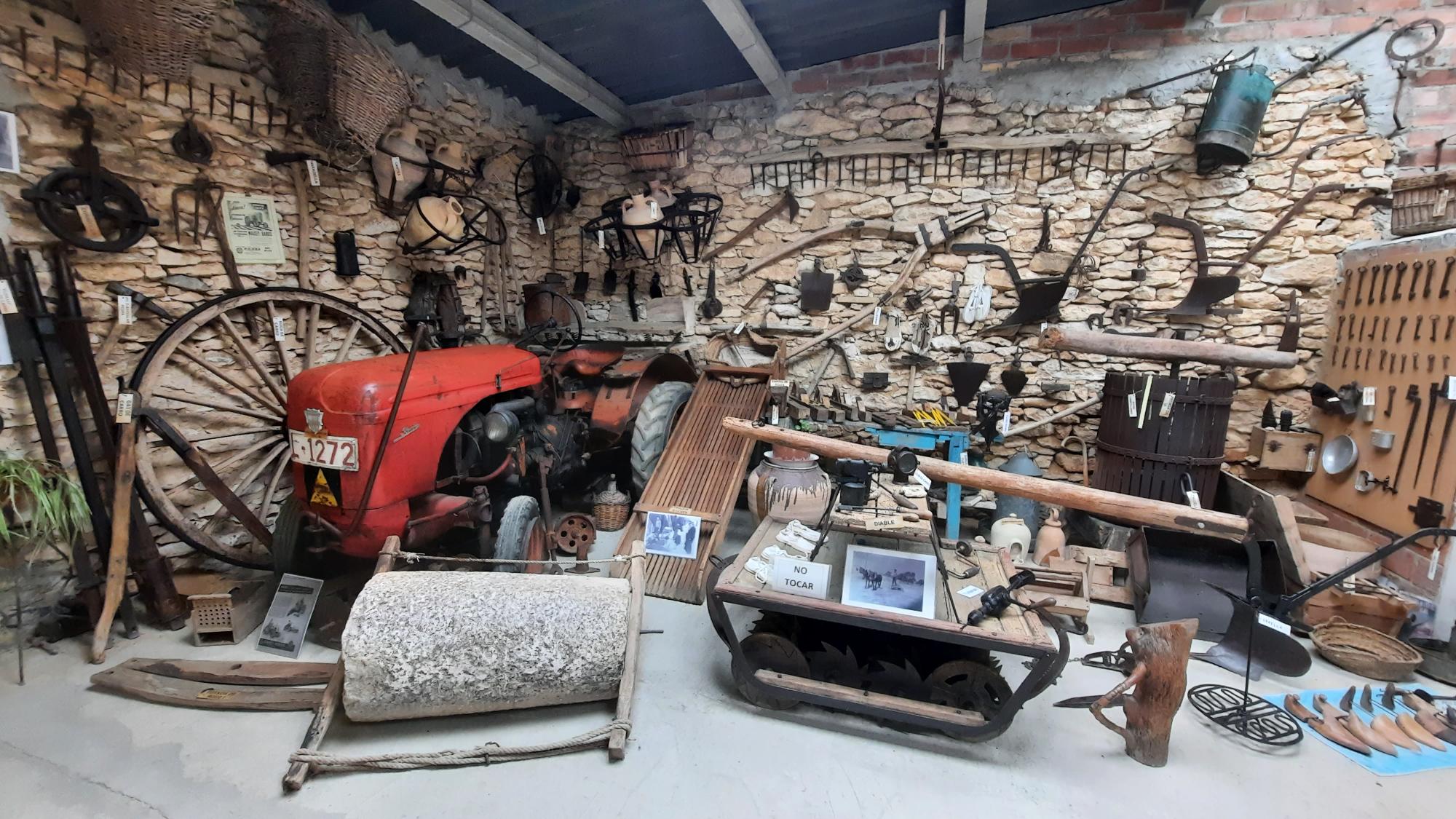
Museum of rural life and local history. It collects tools for harvesting and threshing, for plowing, for mining and for the home.
This space is not only a sample of Almatret and the countryside, it is also a stronghold of the memory of the grandparents and the traditions most deeply rooted in the territory.
Jordi Fornós Gallery
After working for many years in the village’s coal mines, Jordi Fornós devoted himself to the art of stone carving, achieving an extraordinary level of precision and detail.
The gallery displays a collection of coats of arms from the villages of the Segrià region, along with reproductions of buildings and various objects, such as stone chains, each carved from a single block of stone.
Almia (CIE)
Almatret has traditionally been linked to energy production. In the past, through mining and lignite extraction; at present, through hydropower thanks to its geographical location, as the municipality lies within the Ebro Reservoir area.
We have three wind farms, a solar farm, and the HYBUILD and INNOVA pilot plants, research projects funded by the European Commission to improve energy efficiency.
To showcase all of this to the public, we have the Energy Interpretation Centre (CIE), a museum space where, through screenings and virtual reality, as well as workshops and experiments, you can discover first-hand the world of renewable energies.
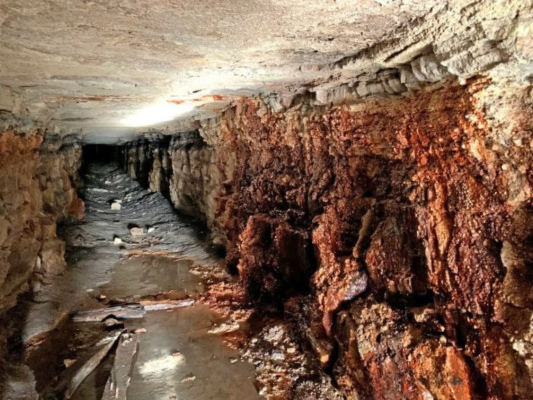
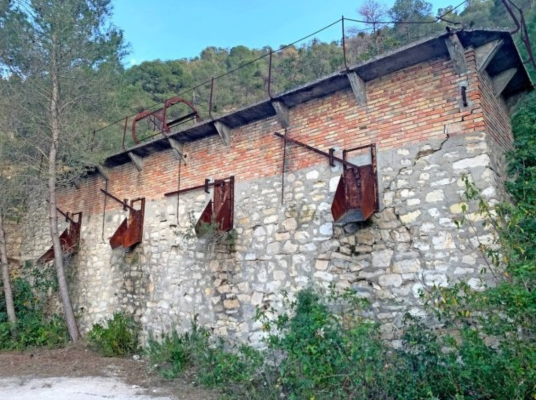
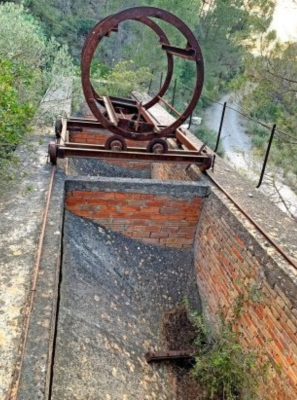
The Mina de L’Espanyola, the Mina del Duro and the Mina del Ricard are three of the 14 lignite coal mines that existed in the municipality of Almatret, located within the Mequinensa mining basin with 196 recognized mines, which was in operation until the mid-20th century.
BTT, hiking and viewpoints
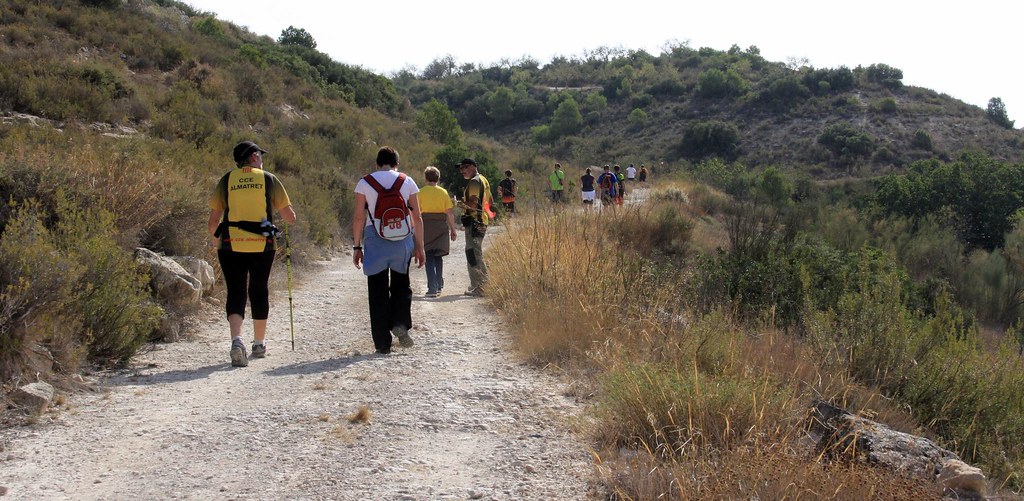
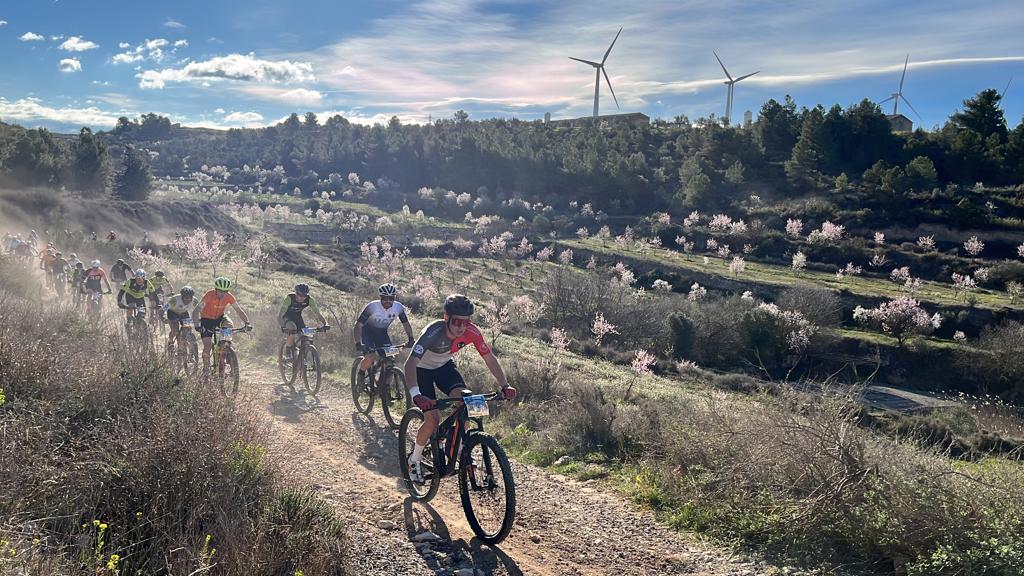
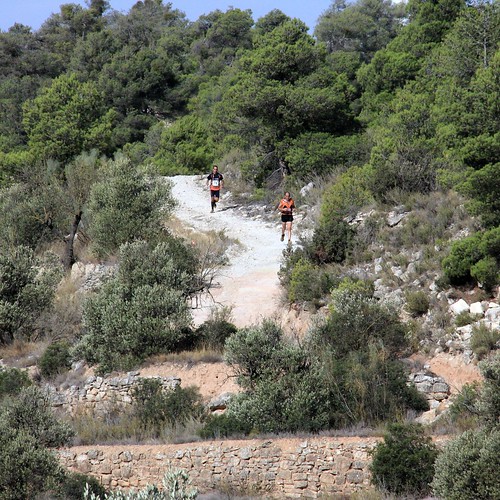
Almatret has an extensive network of paths and trails where you can go hiking and mountain biking.
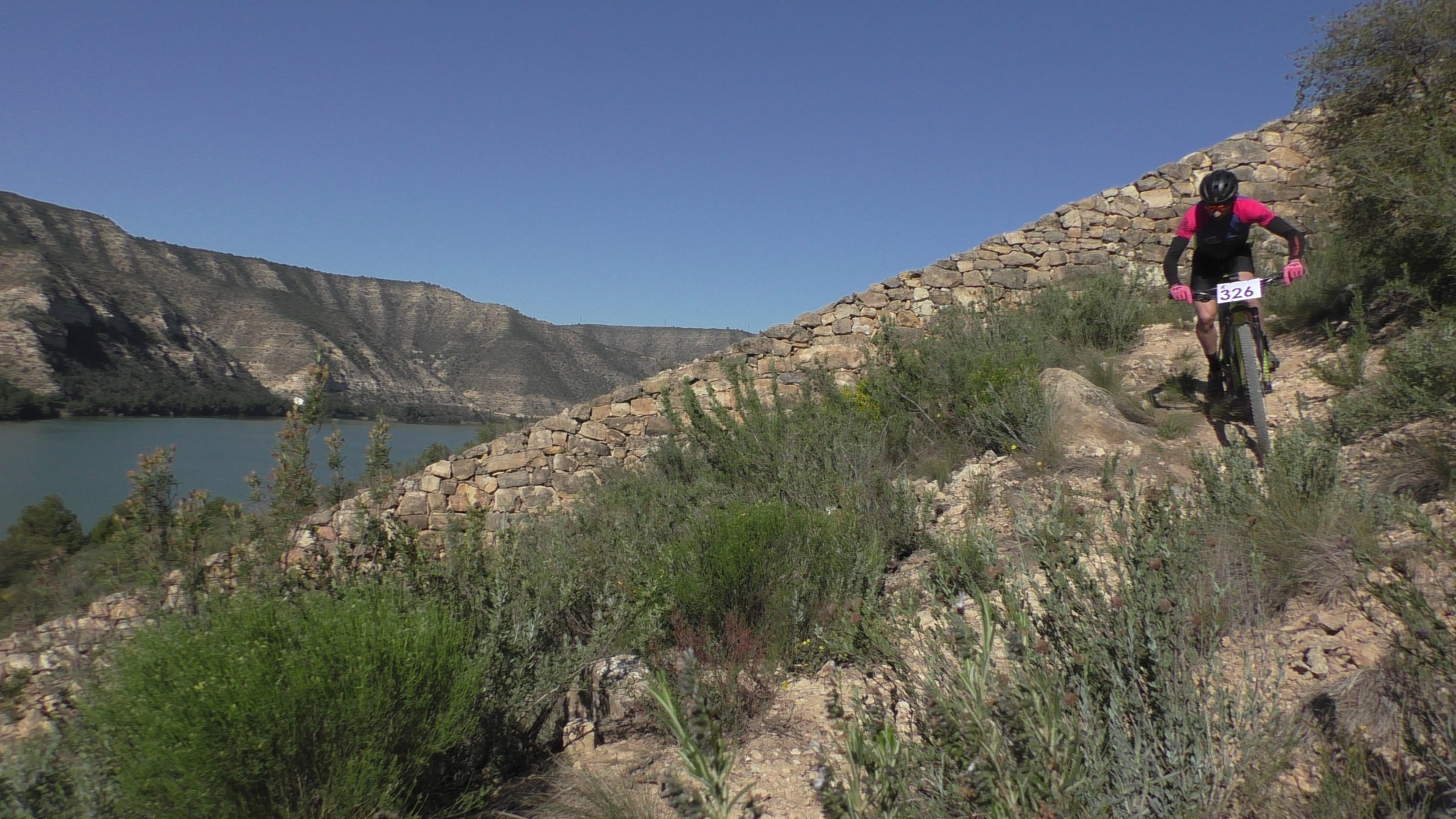
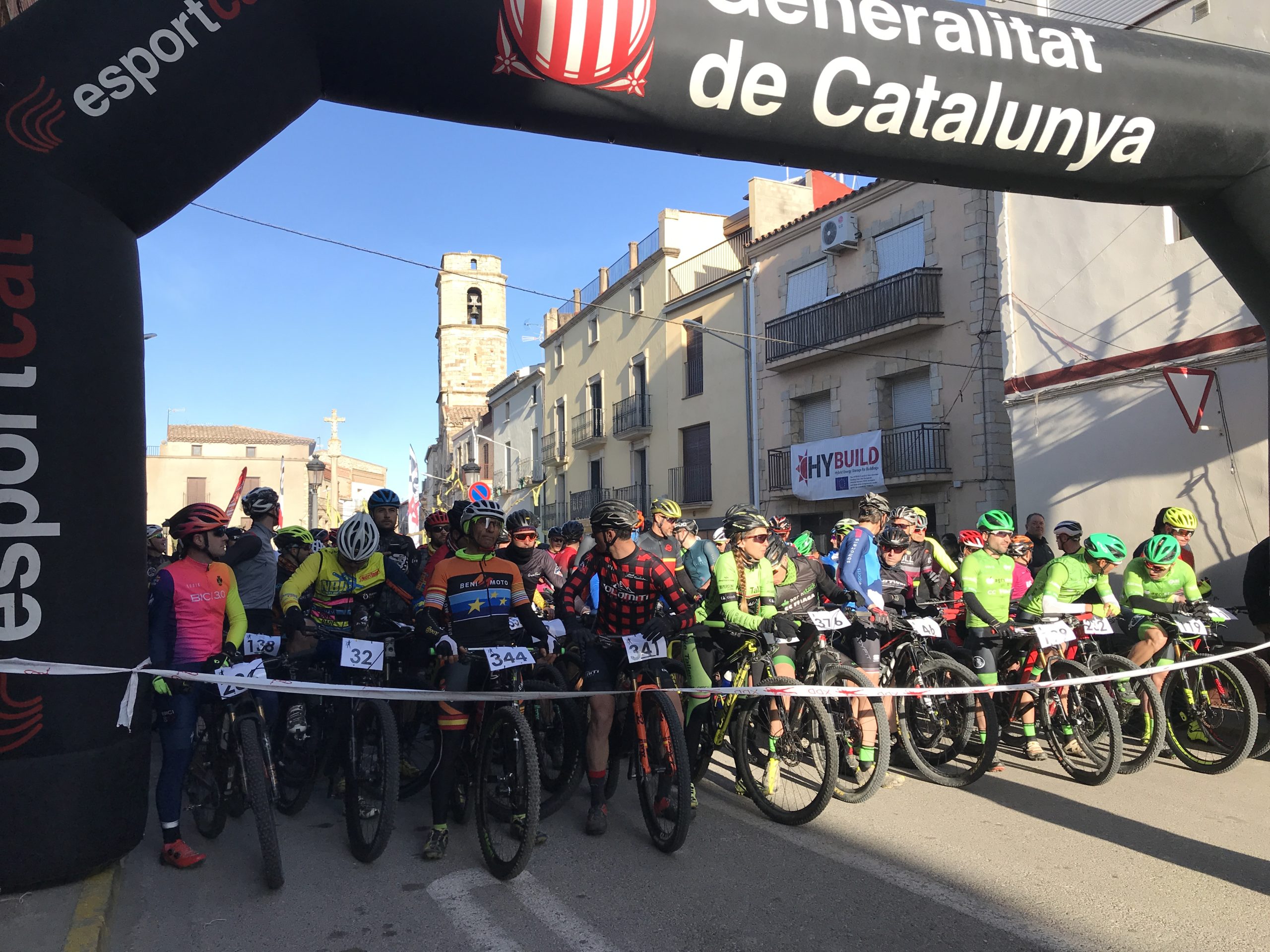
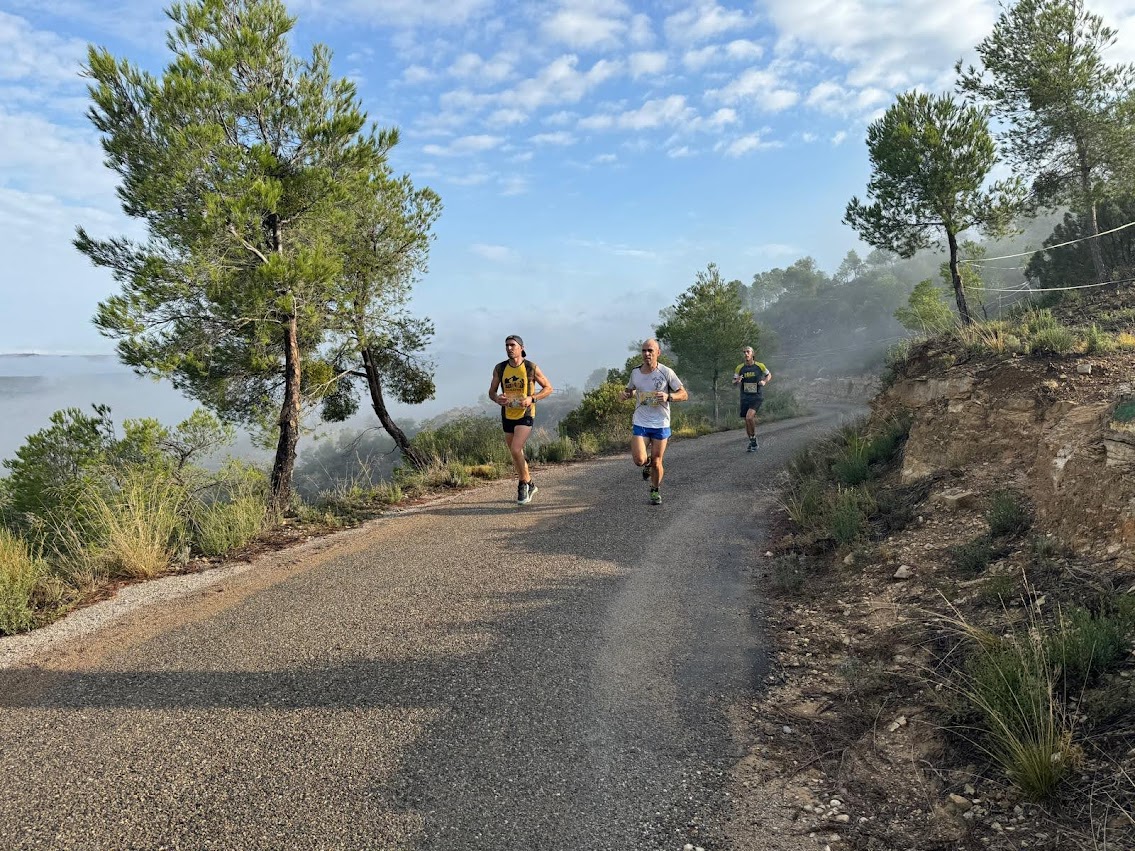
In addition, during the year the Xallenge David Duaigües is held, synonymous with mountain biking, landscape, sport and bicycle festival, and the Cursa i Marxa Tossals d’Almatret, a very attractive circuit of great scenic beauty, which runs through the area of natural interest of the Tossals d’Almatret.
The Catalan section of the Camí de l’Ebre has a first stop in Almatret, the only town in the province of Lleida that is bathed by the Ebro River. Almatret is the end point of Stage 36 (Mequinensa – Almatret) of 20 km and the start of Stage 37 (Almatret – Flix) of 21 km.
From the different viewpoints, which you can access both on foot and by mountain bike, you can enjoy the magnificent views of the Tossals d’Almatret, a protected natural area of great beauty, and the best views of Ponent.
Viewpoint of Tossals d'Almatret
Mirador dels Tossals d’Almatret
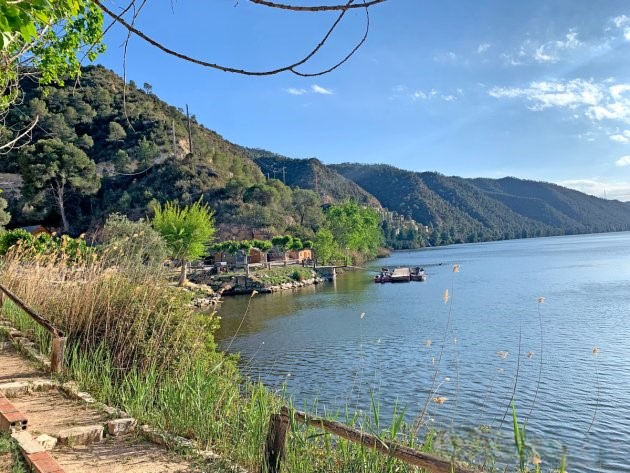
The Tossals d’Almatret are located on the wide waters of the Ebro, on the southern edge of the Aiguabarreig – the confluence of the Segre, Cinca and Ebro rivers-.
This is a natural area of pronounced foothills covered with Scots pine with an undergrowth of continental maquis. Dense pine forests form an island of forests in an environment characterized by the contrasting arid environments of maquis and scrub.
This area of natural interest was protected in 1992 by the Generalitat of Catalonia in order to safeguard these forest communities that are so scarce in the Ebro depression, the fauna and flora of great biogeographic importance that they host and, particularly, landscapes of extreme beauty where the green of the steep slopes and inaccessible forests falls on the blue meanders of the Ebro on its way to the Delta.
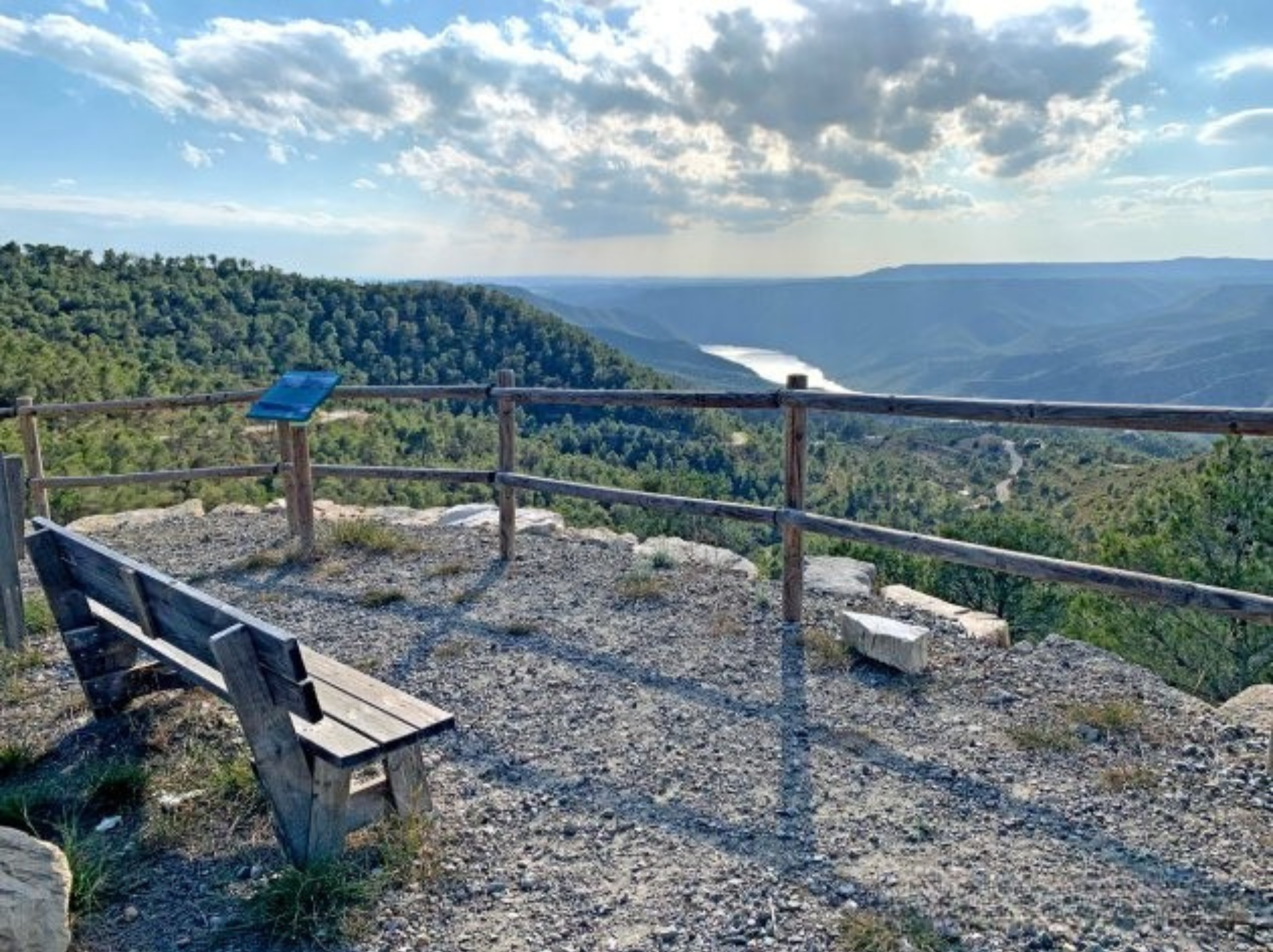
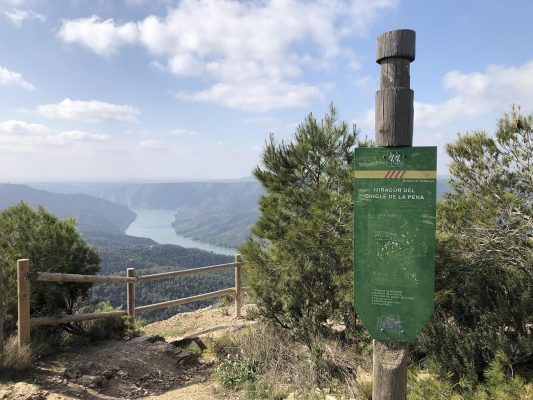
Viewpoint of Cingle de la Pena
On the road to Lleida, leaving the town 0.4 km. on the left, we find a dirt road that is recommended to be taken on foot, by bicycle, or by all-terrain vehicle. At 4.9 km. we reach the viewpoint from where we can enjoy a magnificent view.
Mirador del Cingle de la Pena
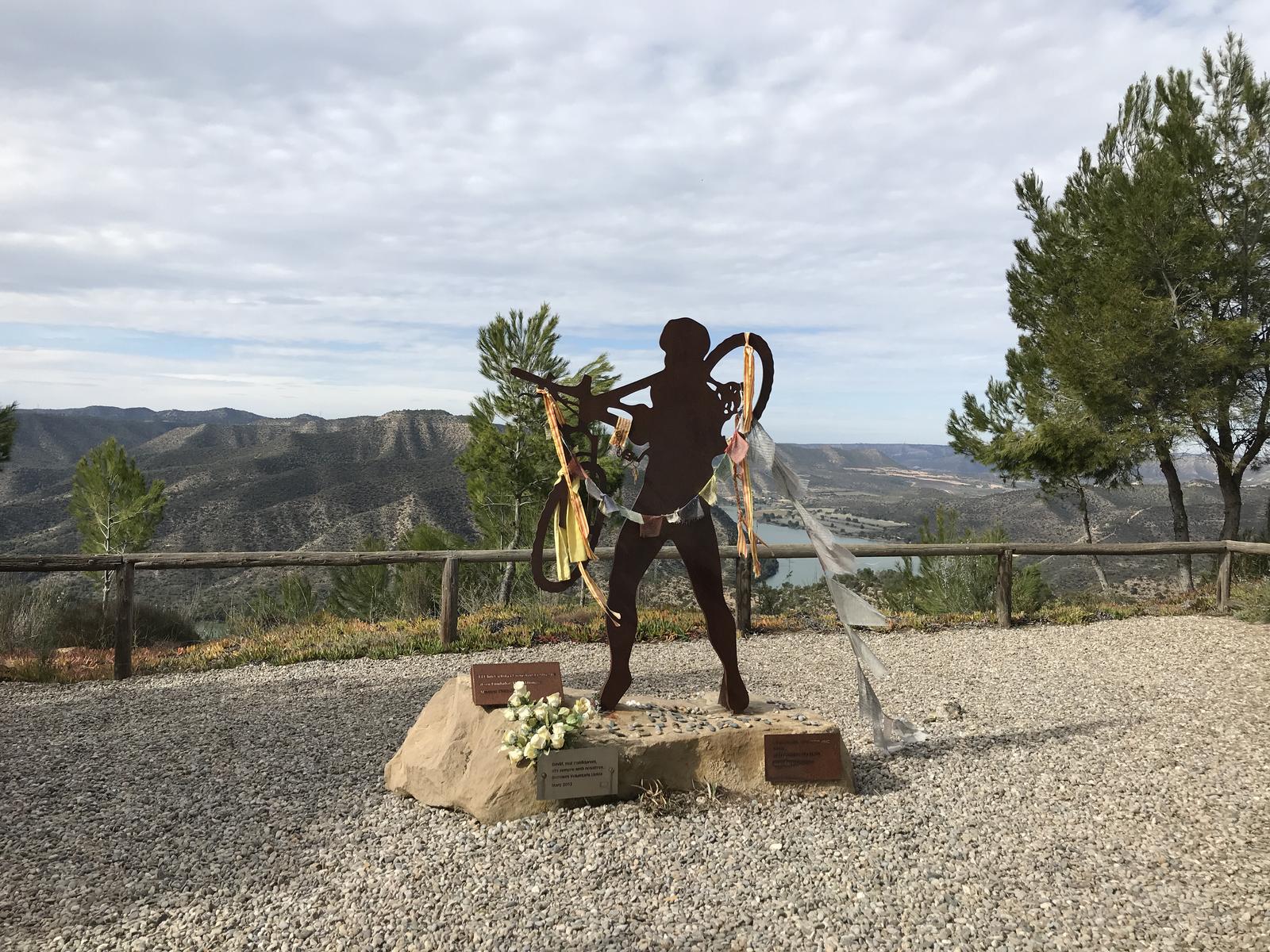
Viewpoint "David Dualgües"
Mirador en record i homenatge a David Duaigües, el bomber fill d’Almatret, fundador del Club
Ciclista i Excursionista Almatret i de l’acreditada cursa BTT que avui porta el seu nom.
Viewpoint in memory and tribute to David Dualgües, the firefighter from Almatret, founder of the Almatret Cycling and Hiking Club and the accredited mountain bike race that today bears his name.
Viewpoint of Riba-roja and Mirador de la Presa o dels Escambrons
Mirador de Riba-roja
Leaving Almatret towards the Faió road, 0.2 km from the town, we find a dirt road on the right that will take us to the viewpoints. We find the first at 2.2 km. It offers us magnificent views of the town of Riba-roja.
From the second viewpoint that we will find at 4.2 km. we can see the dam and reservoir of the Ebro river with the possibility of practicing water sports and fishing (catfish, perch, carp …).
Viewpoint of l'Ermita
It is a natural balcony that is located next to the hermitage of Sant Joan. It allows you to see a large area of the provinces of Lleida and Tarragona.
Viewpoint Corba de l'Urbano
The Mirador de la Corba de l’Urbano offers a formidable view of the limestone slopes above the Ebro, downstream of the confluence of the Segre in Mequinensa, with vegetation typical of the Ebro Depression, highlighting the garric, the hawthorn and the white pine.
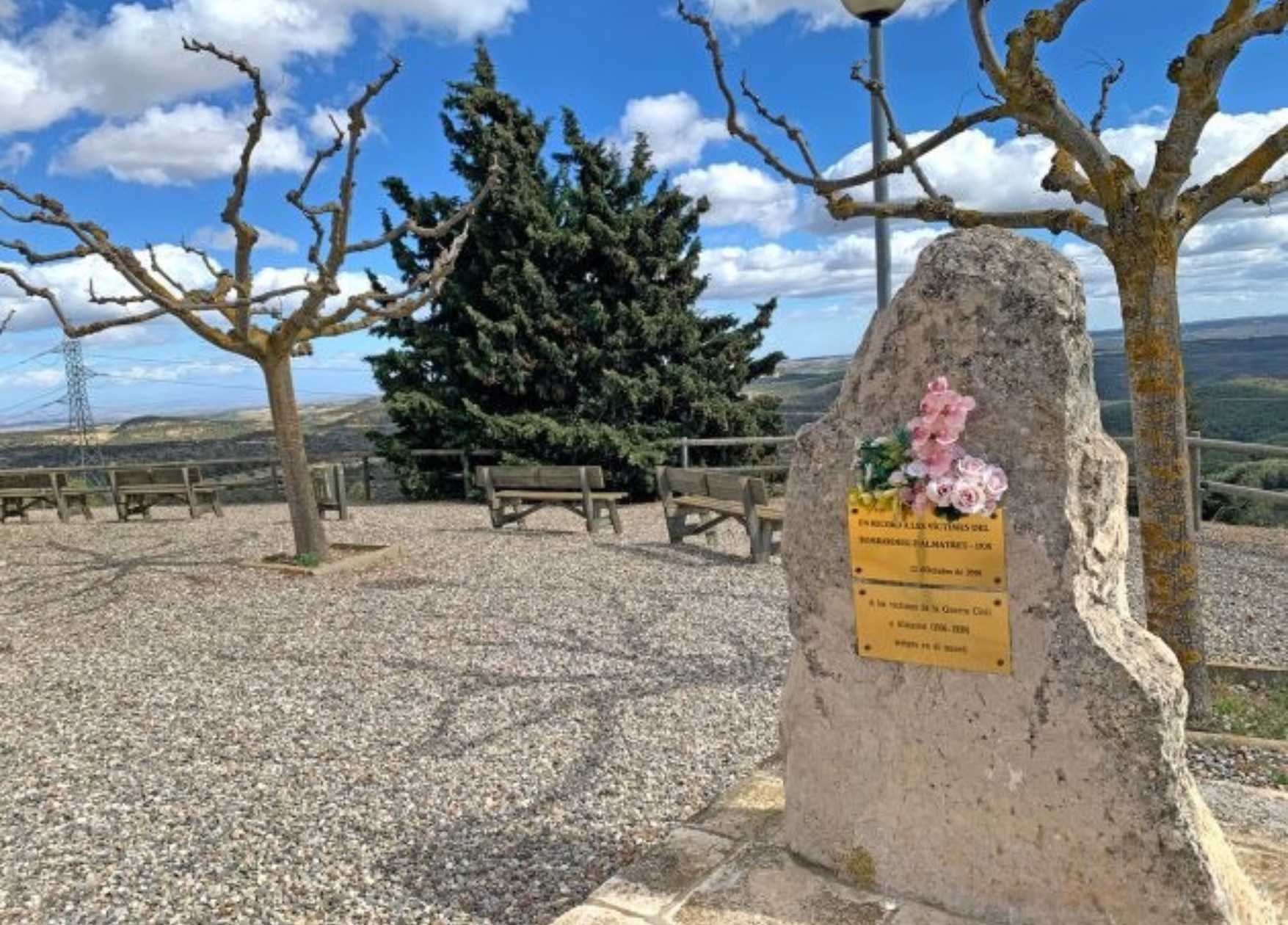
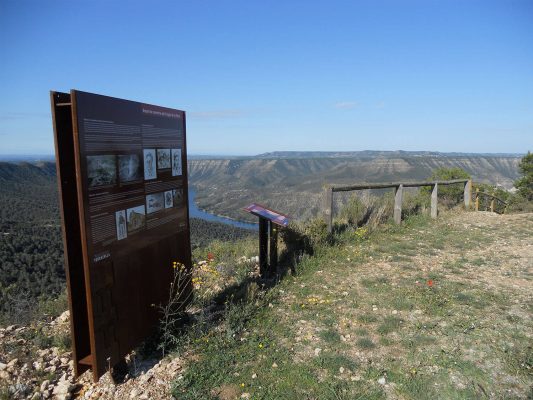
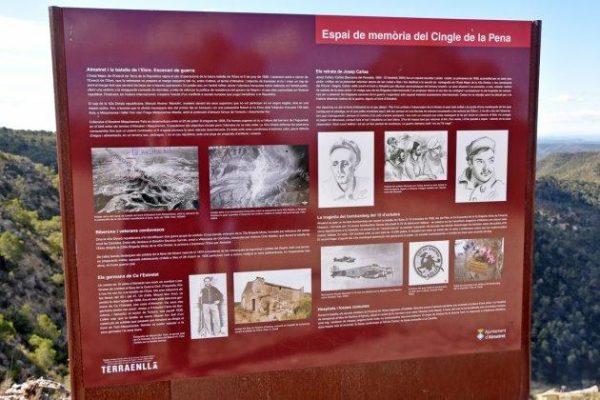
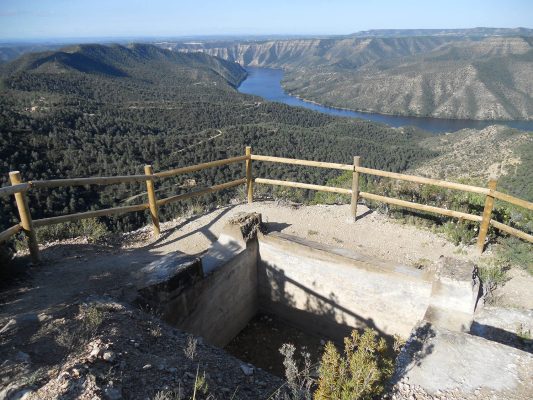
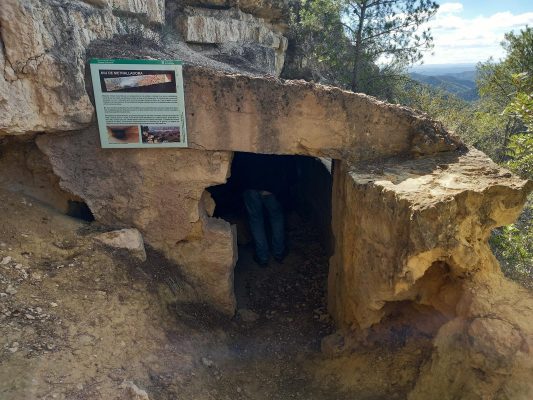
Cingle de la Pena Memorial Space
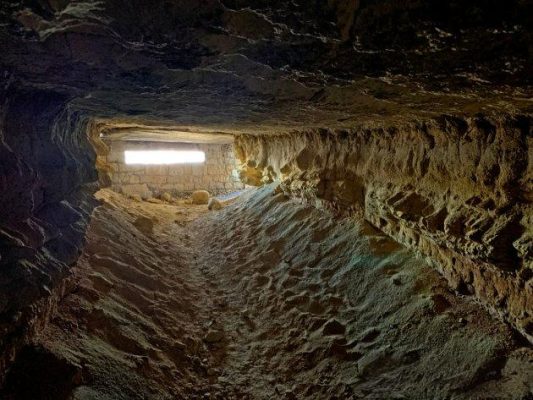
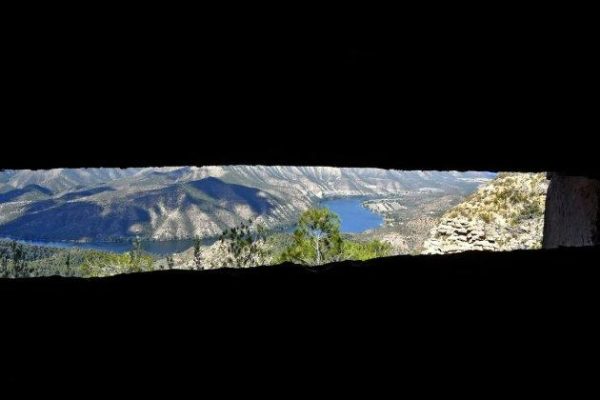
Trenches, machine gun nests, powder magazines and observatories are some of the vestiges
that, today, remain silent in Almatret, witnesses of a bygone era and a memory of an episode in our history that needs to be explained to society to avoid repeating the mistakes of the past.
From the Cingle de la Pena viewpoint, you can see the exact point where the troops of the 42nd Republican Division crossed on July 25, 1938, the beginning of the Battle of the Ebro.
The reservoir and fishing
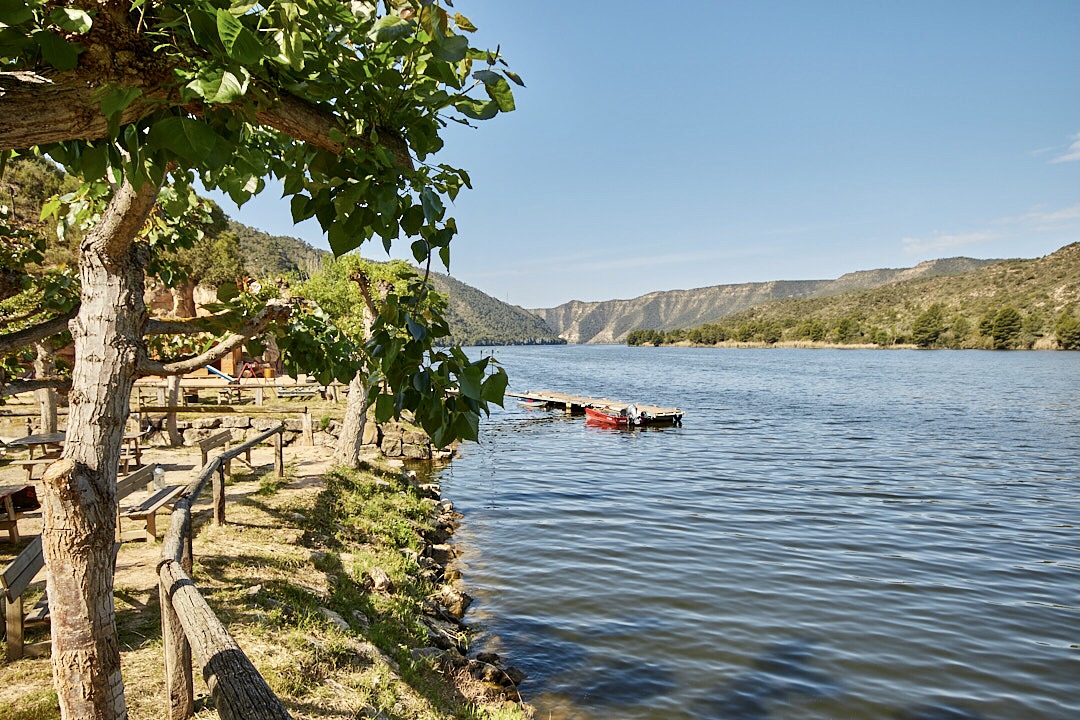
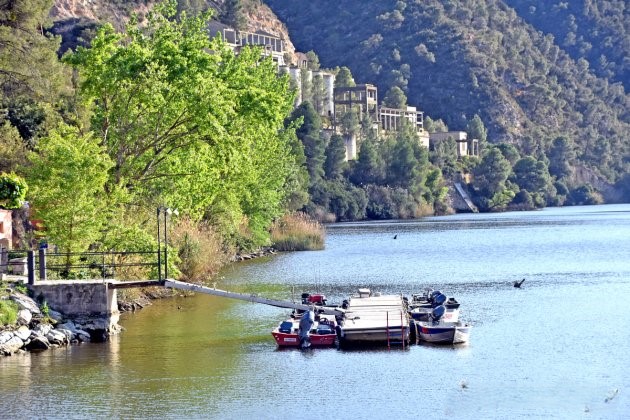
The reservoir is an attraction for its landscape, adventure sports and sailing.
It is also an attraction for fishing, especially for catfish, the largest fish in Eurasian continental waters and one of the largest in freshwater in the world, which was introduced to the Iberian Peninsula during 1979-80 in the Mequinensa reservoir and has expanded throughout the lower river basin and has reached the Ebro delta.
Map - Almatret Guide
Almatret is located at the southern end of the Segrià and is 462 metres above sea level. The Plaza Mayor is its vital centre where most of the streets come together and a good starting point for your visit:
Creu de Terme of Almatret
Sant Miquel Parish Church
House - Count's tower
Old Prison
Well of the village
Hermitage of Sant Joan
Raft
Throughout the year, various cultural, sporting and festive events are organised, among which the most outstanding are those:
Saint Blas Town Festival
MTB gear of Almatret - Xallenge David Duaigües
San Miguel Town Festival
The Tossals of Almatret are located on the wide waters of the river Ebro. It is a protected natural area, since its pronounced buttresses are populated by white pine groves with continental maquias and bushes, many of which are scarce in the depression of the Ebro. These places have a marked contrast of colours between the greens and browns of the steep slopes and the blues of the meanders of the Ebro.
Almatret has a wide network of paths and paths where you can practice hiking and mountain biking.
WE CAN CONSULT THE MAP – GUIDE TO THE ATTACHED FILE. TO THE LINK YOU WILL FIND THE ROUTES OF ALMATRET.